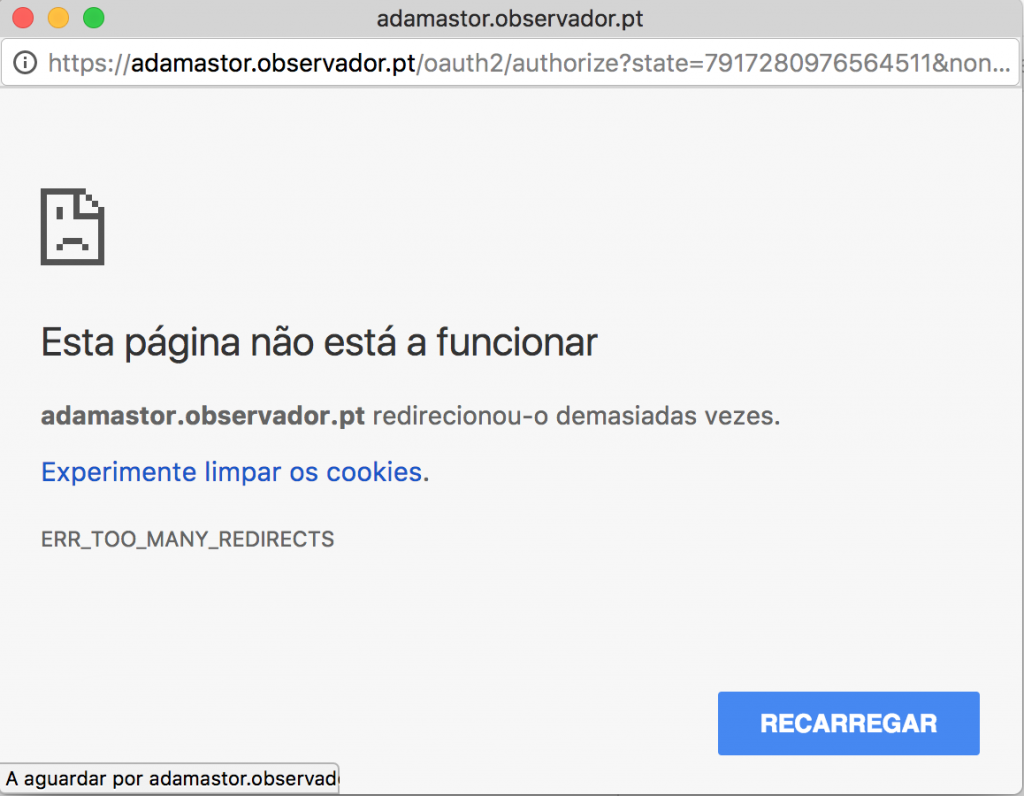
server {
listen 80;
server_name domain.com *.domain.com;
charset utf-8;
location /.well-known/acme-challenge/ {
try_files $uri /dev/null =404;
}
return 301 https://$host$request_uri;
}
server {
listen 80;
server_name domain.com *.domain.com;
charset utf-8;
location /.well-known/acme-challenge/ {
try_files $uri /dev/null =404;
}
return 301 https://$host$request_uri;
}

This image shows a patch of the sky centered on the Orion constellation and is based on observations performed by ESA’s Planck satellite at microwave and sub-millimetre wavelengths.
http://sci.esa.int/planck/55911-polarised-emission-from-orion-annotated/
As heard on As heard on FX Oliveri Mix @ Social Club – 30.11.2010
As heard on FX Oliveri Mikro Tremplin – 18.03.2017 (29min)
https://www.youtube.com/watch?v=3ga1NPiUHvA

letsencrypt topic about this issue: https://community.letsencrypt.org/t/solution-client-with-the-currently-selected-authenticator-does-not-support-any-combination-of-challenges-that-will-satisfy-the-ca/49983/2

This is due to a security incident with LetsEncrypt
Incident Status Security Issue
Components acme-v01.api.letsencrypt.org (Production), acme-staging.api.letsencrypt.org (Staging), acme-staging-v02.api.letsencrypt.org (Staging)
Locations High Assurance Datacenter 1, High Assurance Datacenter 2


This is an example of what a Software Engineer does at Google Display Ads and Google Brain.
Got it from https://www.linkedin.com/in/cshallue/
Christopher Shallue, senior software engineer at Google AI in Mountain View, California
Summary:
• Software Engineer on the Google Display Ads team, primarily focused on GMail and Google Maps.
• Specialized in machine learning models for ad selection and personalization.
Prediction modeling:
• Lead engineer developing large-scale logistic regression models for ad selection (billions of training examples, tens of millions of weights, highly parallelized).
• Responsible for end-to-end development including model training, evaluation, experiments and launch.
• Oversaw and implemented significant improvements to the training data collection pipeline, increasing both data quality and quantity.
• 5 launches with combined revenue impact $30+ million / year.
Content recommendation:
• Lead engineer developing a large-scale collaborative filtering model for content recommendation (hundreds of millions of examples, highly parallelized).
• Owned and drove this project through complete end-to-end development including design, model building, infrastructure changes, experiments and launch.
• Launched with revenue impact $5+ million / year.
Leadership:
• Technical Lead (TL) of Modeling Team (9 members): ran a weekly meeting and managed the agenda; consulted and advised for numerous machine learning projects within the team.
• Mentored several new team members.
Summary:
• I am a senior research software engineer on the Google Brain team (http://g.co/brain).
• I work on a variety of machine learning research projects. My role for each project is one (or more) of: research lead, technical lead, mentor and/or collaborator.
• I teach a 2-day machine learning class at Google offices around the world – so far I’ve taught in Mountain View, New York and Zurich.
Selected projects highlighted below.
Identifying exoplanets with deep learning:
• Can we use deep learning to discover new planets? I posed this question and initiated a collaboration with an astronomer at Harvard to find out.
• As project lead, I developed convolutional neural networks to identify exoplanets in data from NASA’s Kepler mission.
• I gave a guest lecture on this project at the NASA Frontier Development Lab.
• Publication and code coming soon!
Unsupervised sentence embeddings:
• I implemented and published the Skip Thoughts model in TensorFlow.
• Using synchronized distributed training, I improved the training time from 4 weeks to 4 days with no loss of accuracy.
Machine learning for image captioning:
• I developed the latest version of Google’s machine learning system that automatically produces descriptive image captions. This work combines deep neural networks for computer vision and machine translation.
• Compared to the previous version, my implementation has 4x faster training speed and achieves an additional 2 points of accuracy in the BLEU-4 metric.
• I wrote a widely-read article on Google’s Research Blog.